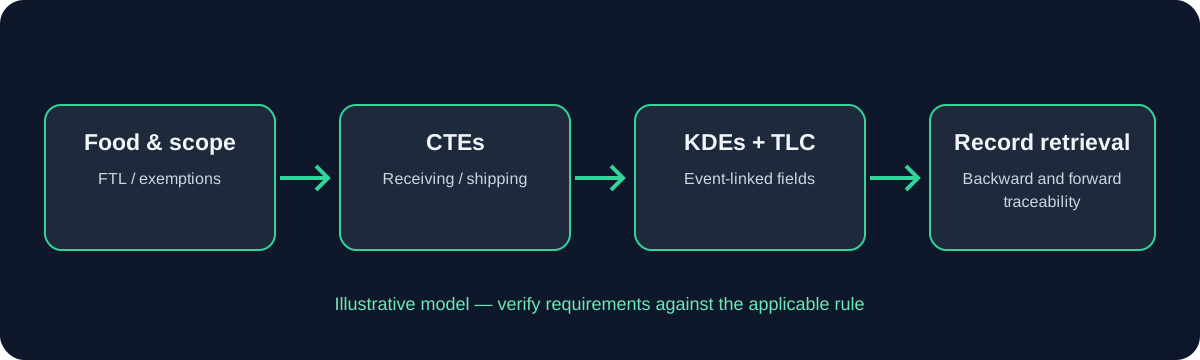
What this guide covers
List CTEs the entity performs and identify the applicable provision and KDEs. Record the exact source for every field.
Practical implementation
For each KDE, record the source document/system, owner, validation rule, exchange method, and gap status. Check that records remain linked to the correct lot and event.
Limitations and verification
Do not copy a generic field list across every event. Mark unresolved interpretations for specialist review.
Download the editable worksheet
Download CSV worksheetHow to complete the event-to-data map
Complete one row for each distinct food/activity combination rather than one row per facility. Record the physical trigger, the event definition reviewed, the applicable product scope, the KDE list and the record that captures each value. Add a source citation or CFR section for the legal requirement and mark internal control fields separately. This prevents the worksheet from becoming an undifferentiated list of every field anyone might want.
For each KDE, identify the data owner, source system, format, validation rule, downstream recipient and exception route. If a value comes from a supplier, record how the company verifies it and what happens when it is missing. Test one completed row against an actual transaction and keep the test evidence with the worksheet.
This worksheet is an internal planning aid, not an FDA-prescribed form and not a legal scope determination. Confirm the final field set against the current regulation and FDA material.
How to verify this information
Official and supporting sources
Verify important regulatory claims against primary sources. Draft guidance is non-binding.
Educational information only. The regulation and current official guidance control. This page is not legal advice, FDA approval, or a guarantee of compliance.