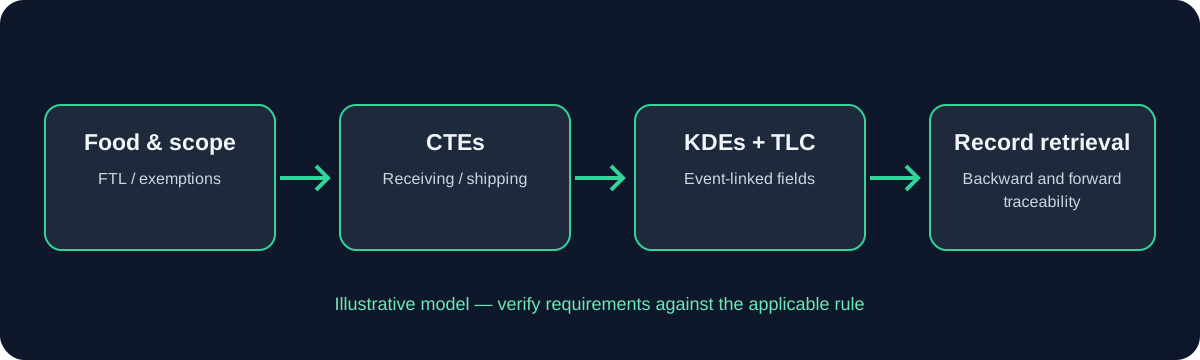
What this guide covers
Check missing required fields, invalid dates, inconsistent units, malformed identifiers, duplicate rows, and inconsistent partner/location names against the applicable KDE map.
Practical implementation
Test record relationships across receiving, storage, transformation, and shipping. Record the issue, root cause, affected records, owner, corrective action, and retest result.
Limitations and verification
Columns can all be present while a lot is linked to the wrong shipment. Test relationships, not just field presence.
Interactive readiness tracker
Mark a task complete only when evidence has been reviewed.
Progress is stored locally where supported and is not a compliance verdict.
Measure data defects by type and cause
Use a consistent defect taxonomy: missing value, invalid format, unknown identifier, mismatched lot, inconsistent location, duplicate record, unsupported correction, broken document link, or export omission. Distinguish a value that is genuinely not applicable from a value that should have been captured but is missing. This distinction determines the corrective action.
Sample across suppliers, events, shifts and systems. Report the number of records reviewed, the number with each defect, the severity and the likely cause. Avoid relying only on an overall percentage; a single defect in a critical lot link may matter more than many cosmetic formatting issues.
After a correction, repeat the same test on new records and confirm that the cause has been addressed. A training reminder is appropriate for a knowledge gap, but a software validation or interface problem requires a technical fix and regression test.
How to verify this information
Official and supporting sources
Verify important regulatory claims against primary sources. Draft guidance is non-binding.
Educational information only. The regulation and current official guidance control. This page is not legal advice, FDA approval, or a guarantee of compliance.