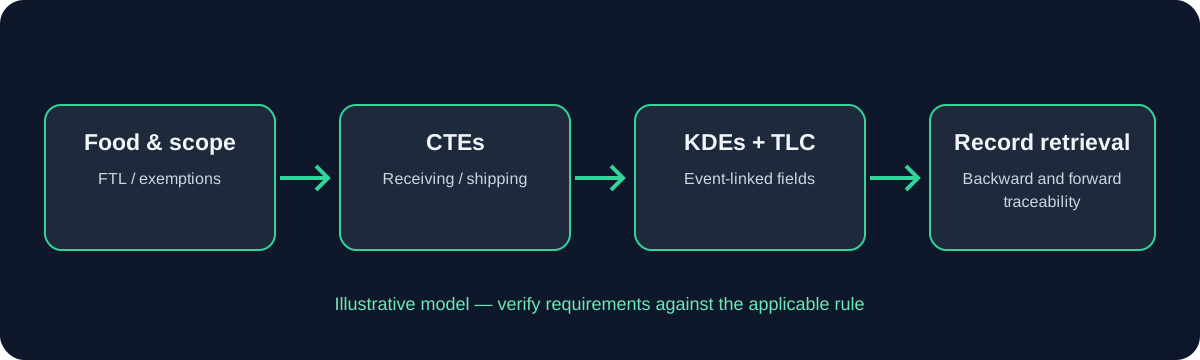
What this guide covers
Before comparing vendors, document products, CTEs, KDEs, TLCs, partners, locations, and retrieval workflows. Assess validation, search, export, audit history, access controls, backup, recovery, integrations, implementation effort, and total cost.
Practical implementation
Ask vendors to demonstrate your own scenarios: missing field, changed location, split shipment, transformation, and sortable export. Evaluate whether normal staff can use the output.
Limitations and verification
Do not claim a vendor is FDA-approved or guarantees compliance. Disclose commercial relationships if any exist; this guide makes no vendor endorsements.
Evaluate software using evidence and test cases
Ask vendors to demonstrate the business’s actual event and data scenarios, not only a polished generic demo. Include the ability to preserve lot identifiers, represent split and transformed lots, retain source records, control corrections, export sortable data and provide audit history. Confirm whether a feature is included in the offered product, requires custom configuration or depends on another system.
Use a weighted evaluation matrix only after defining the requirements. Separate mandatory regulatory needs from desirable operational features such as barcode scanning, dashboards or supplier portals. A high total score should not compensate for a failed mandatory traceability test. Record evidence for each rating, including screenshots or test results where appropriate.
Before purchase, test data migration and export with representative values, including leading zeros, long codes, multiple inputs and exception records. Confirm data ownership, backup, access during outage, retention, exit/export rights and support arrangements. Software can support a compliant process but cannot decide the legal scope for the business.
How to verify this information
Official and supporting sources
Verify important regulatory claims against primary sources. Draft guidance is non-binding.
Educational information only. The regulation and current official guidance control. This page is not legal advice, FDA approval, or a guarantee of compliance.