What this guide covers
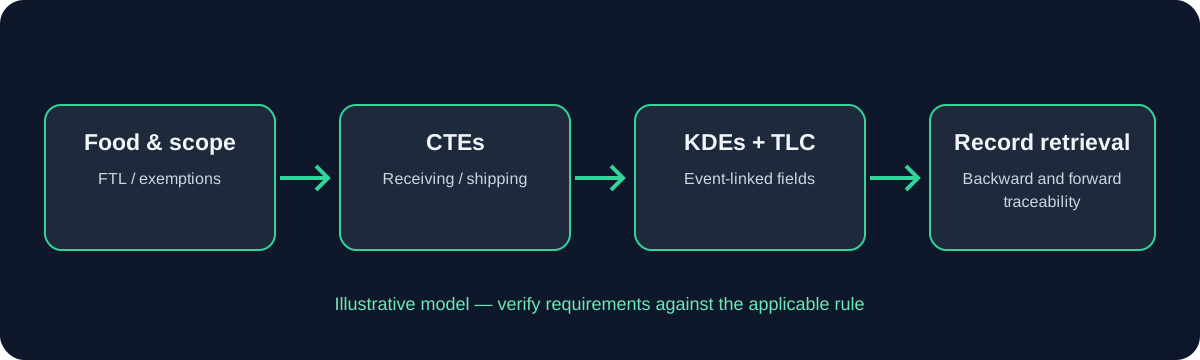
Identify the covered food and applicable CTE, then confirm which information the rule requires. Do not label every template field a statutory requirement.
Practical implementation
Agree field definitions, date formats, units, lot-code handling, location identifiers, transfer method, and correction process. Keep the response with the supplier record.
Limitations and verification
Retest when supplier systems or product flows change, and escalate missing or conflicting information.
Download the editable worksheet
Download CSV worksheetSend a precise request and validate the response
Identify the specific product, transaction and traceability lot in the request. State which data elements or documents are needed for the relevant event, the preferred format, the requested response date and the contact for resolving discrepancies. Avoid asking for “all FSMA 204 records” without defining the transaction because a broad request can lead to excessive but unusable information.
When the response arrives, check that the supplier’s identifiers match the product and shipment, that dates and locations are interpretable, and that the file can be linked to the receiving record. Preserve the original response and document any correction. If the supplier claims an exemption, request the relevant rationale and assess the effect on your own obligations rather than assuming the claim resolves the matter.
The template is a communication aid. It is not a substitute for the rule-specific KDE analysis or a guarantee that the supplier’s response is legally sufficient.
How to verify this information
Official and supporting sources
Verify important regulatory claims against primary sources. Draft guidance is non-binding.
Educational information only. The regulation and current official guidance control. This page is not legal advice, FDA approval, or a guarantee of compliance.