What this guide covers
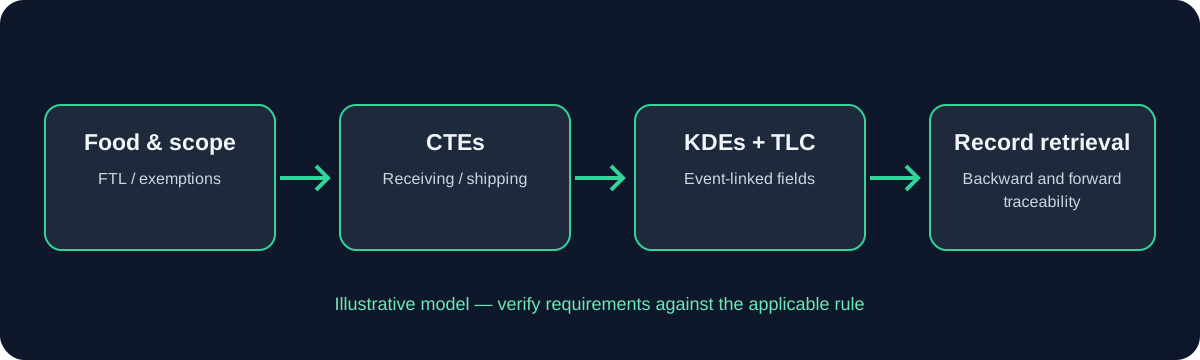
Capture product, event, date, location, partner, applicable TLC, source information, quantity, and source record. Keep the TLC distinct from SKU, order, shipment, and work-order identifiers.
Practical implementation
Define how the code is transmitted, stored, validated, and linked to downstream records. Test whether staff can retrieve the associated event records.
Limitations and verification
Preserve leading zeros and punctuation; do not change a code without checking the rule’s conditions.
Download the editable worksheet
Download CSV worksheetUse the worksheet to preserve identifier relationships
Record the TLC exactly as assigned or received, including leading zeros and punctuation. Separately record any internal batch, SKU, pallet, order or shipment identifiers and explain the relationship between them. Do not overwrite the TLC with an internal code simply because the internal system uses a different field name.
For split or consolidated movements, use additional rows or a linked relationship table rather than compressing several lots into a single free-text cell. If transformation occurs, capture the relevant input-output relationship under the applicable procedure. The worksheet should allow a reviewer to follow the relationships without guessing.
Before using the worksheet operationally, compare its fields with the event-specific rule requirements and test it using a real or controlled example. This is a working template, not an official FDA form.
How to verify this information
Official and supporting sources
Verify important regulatory claims against primary sources. Draft guidance is non-binding.
Educational information only. The regulation and current official guidance control. This page is not legal advice, FDA approval, or a guarantee of compliance.